
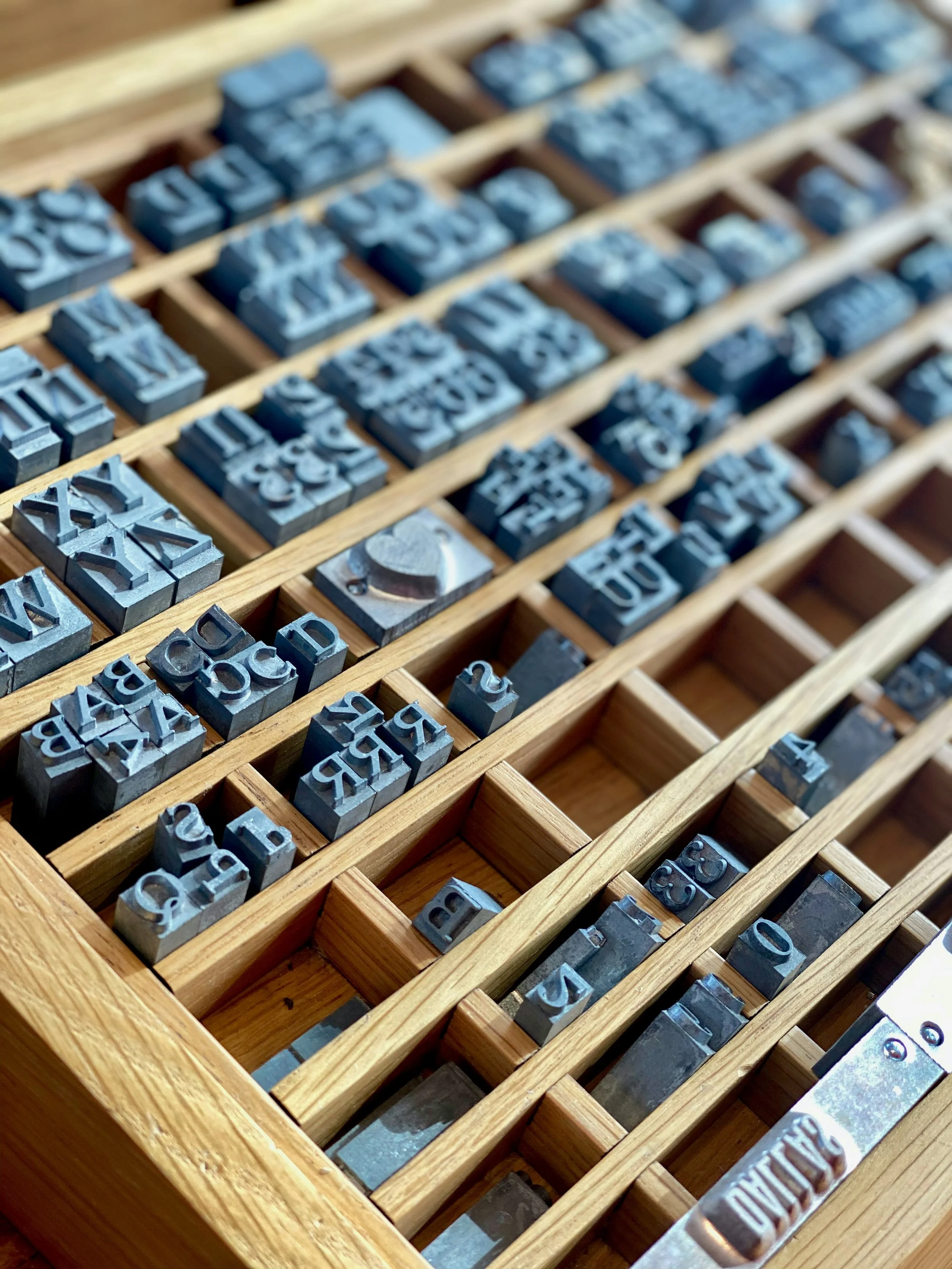
Letterpress art
Letterpress craft
Letterpress is a relief printing process that has evolved from the primary method of global communication to a niche, high-value artisanal craft. The "outline craft" of letterpress involves the tactile interaction of physical type and machinery with paper, creating a unique aesthetic prized in the modern era.
I. Definition of the Craft
Letterpress printing is the process of applying ink to a raised surface (relief) that is then pressed into a substrate (usually paper).
Core Principle: "Relief printing"—only the raised surface makes contact and transfers ink.
Key Feature: The resulting debossment, or physical impression into the paper, is the signature aesthetic of modern letterpress.
II. Essential Tools and Materials
The craft relies on specific equipment and materials that form its tangible identity:
Item DescriptionModern Alternative/NotePressMechanical machines ranging from simple hand presses to automatic cylinder presses (e.g., Heidelberg Windmill).Restored vintage presses are standard today.Type/PlatesIndividual metal type pieces or woodblocks.Digital-era photopolymer plates allow for intricate designs.InkThick, viscous, oil-based or soy-based inks.Modern inks offer vibrant, opaque matte colors.PaperSoft, absorbent stock, often 100% cotton fiber, to best receive the deep impression.Known for "deckled" (hand-torn) or thick edges.
III. The Workflow: A Step-by-Step Craft Outline
The artisanal process is highly manual and requires precision:
Design: The design is finalized digitally and converted into a physical medium (either metal type is set by hand or a photopolymer plate is made from a negative).
Setup (Makeready): The type/plate is locked into the press bed. The printer makes precise adjustments to the pressure and positioning to ensure even contact. This step is a highly skilled "art of feel and sight".
Inking: Ink is carefully mixed and applied to the rollers, which then coat the raised surfaces of the type.
Printing (The Impression): The paper is fed into the press, where the physical impression is made. In contemporary practice, this requires a deliberate "kiss" or deep bite into the paper surface.
Finishing: The printed sheets are allowed to dry slowly (to prevent smudging) before being cut, trimmed, or finished.
IV. Aesthetic and Modern Importance
The craft's importance today is rooted purely in its high-end aesthetic and sensory appeal:
Tactile Luxury: The physical feel of the impression provides a sensory experience that digital printing lacks, signaling quality and bespoke craftsmanship.
Visual Richness: The marriage of thick ink and soft cotton paper creates uniquely sharp, matte, and rich graphic results.
Artistic Niche: It is predominantly used for bespoke wedding invitations, fine art prints, and high-end business stationery, thriving in the market for sustainable luxury goods.