
Growing & Drying Herbs
herbs.
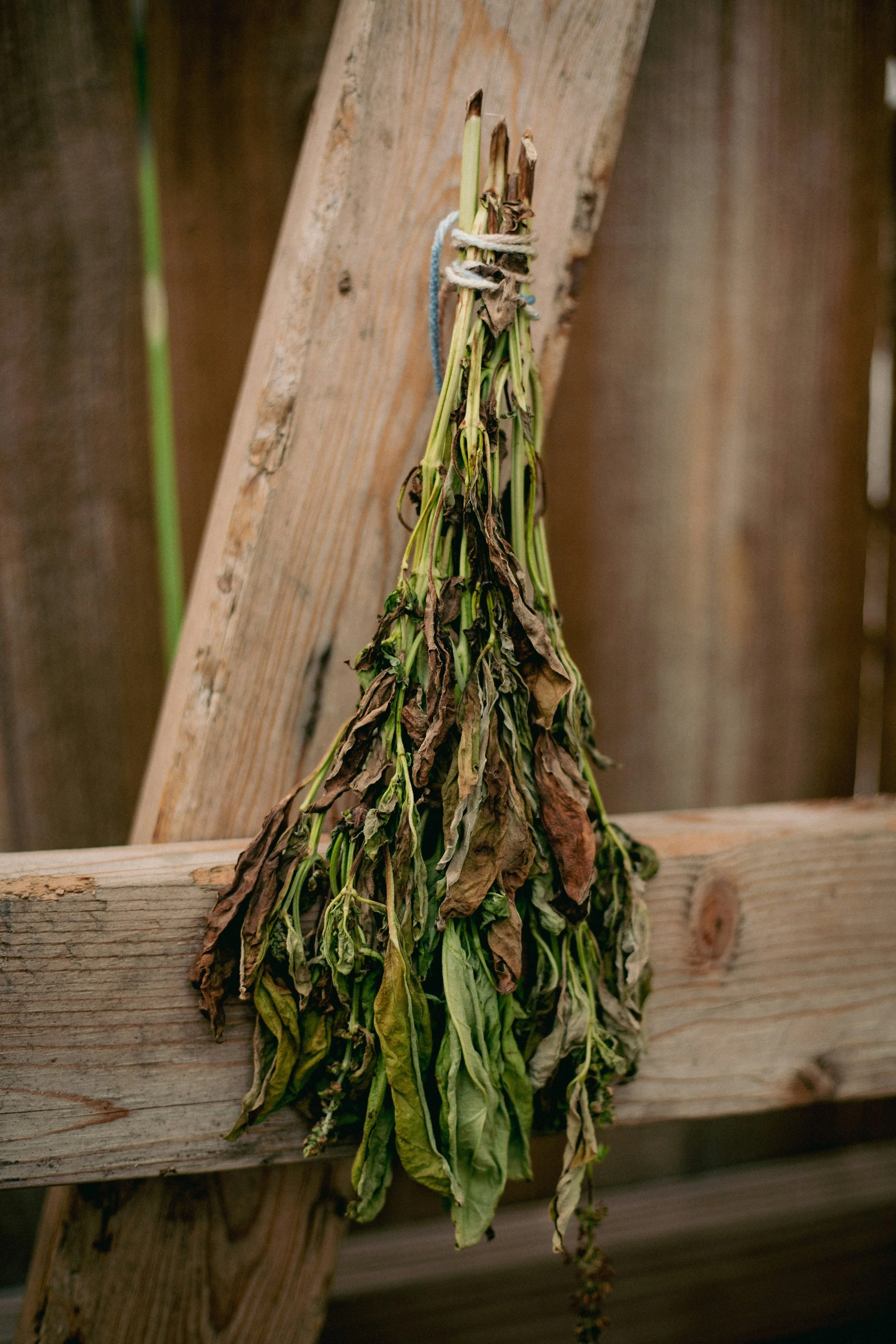
Herb drying is the process of removing moisture from herbs to preserve their flavor and potency for long-term storage and use. The best method depends on the type of herb, but the key is using low heat and good air circulation.
I. Preparation and Harvesting
Timing: Harvest herbs in the early morning after the dew has evaporated and before the flowers open (the "bursting bud" stage) when their essential oils are at their peak.
Cleaning: Shake the branches lightly to remove any dirt or insects. Avoid washing them unless necessary; if you must rinse, pat them thoroughly dry with a clean towel to remove all surface moisture before starting the drying process to prevent mold.
Selection: Discard any bruised, soiled, or imperfect leaves and stems.
II. Drying Methods
Different methods work better for different types of herbs.
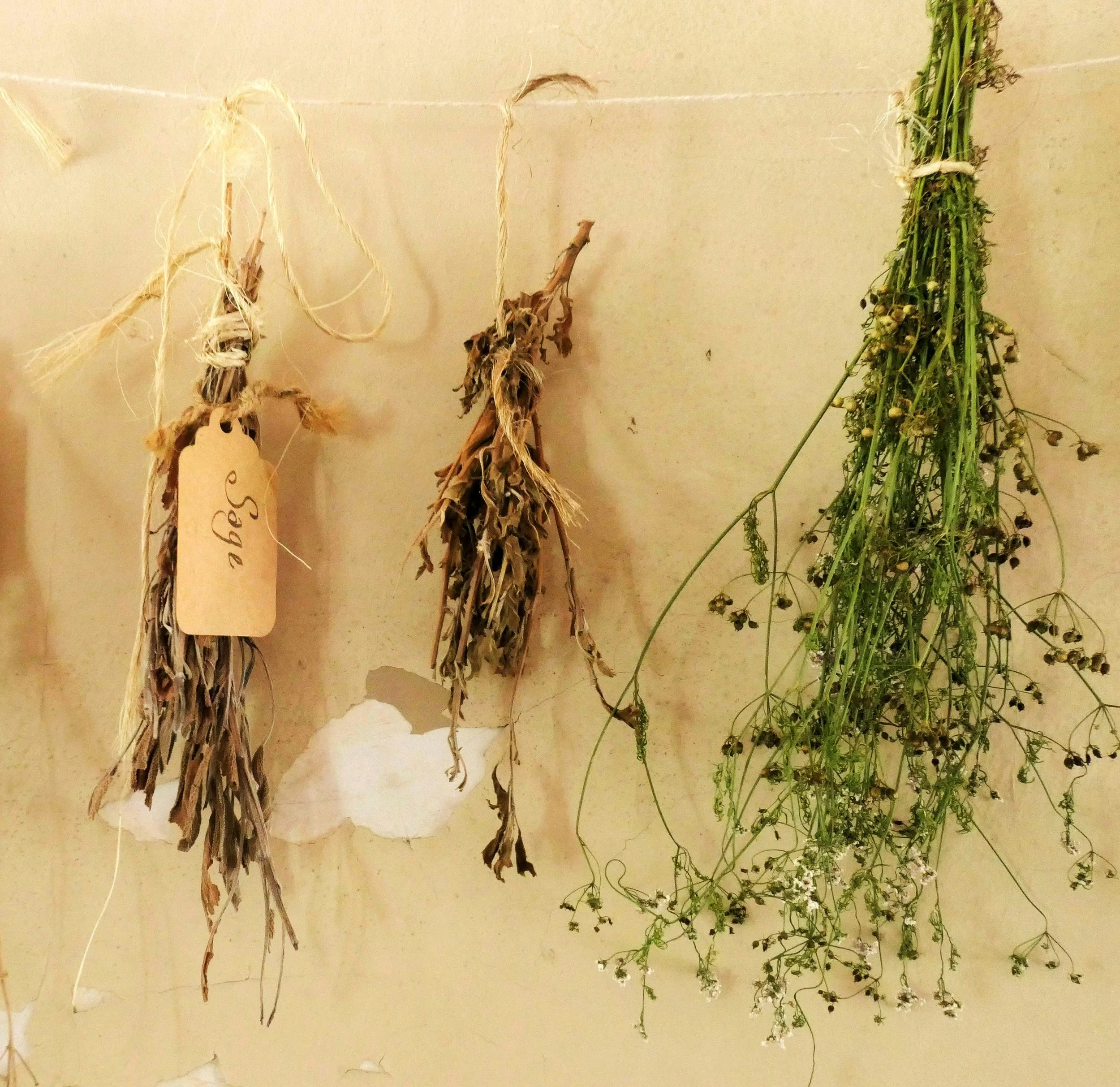
Air Drying (Hanging)
Best for: Hardy, low-moisture herbs with sturdy stems, such as rosemary, sage, thyme, oregano, and lavender.
Process: Gather small bunches of 5-10 stems and secure them with twine or a rubber band (rubber bands shrink with the stems, keeping the bundle tight). Hang them upside down in a cool, dry, dark, and well-ventilated area (e.g., a pantry or attic) away from direct sunlight.
Time: This method typically takes 2-4 weeks, depending on humidity levels.
Drying Flat
Best for: More delicate, smaller-leafed herbs like parsley, mint, and bay leaves.
Process: Remove leaves from stems and spread them in a single layer on a drying screen or baking sheet lined with paper towels.
Time: Can take a week or longer, but is faster than hanging larger bunches.
Electric Dehydrator
Best for: All herbs, especially high-moisture varieties like basil and mint that might mold if air-dried in humid climates.
Process: Arrange herbs in a single layer on trays. Set the temperature to a low setting (around 95°F to 115°F or 35°C to 46°C) to preserve essential oils.
Time: This is a faster method, usually taking 1 to 4 hours.
Microwave
Best for: Small quantities of delicate herbs.
Process: Layer leaves between two sheets of paper towel. Microwave on a low setting for 30-second intervals, checking frequently until dry and crumbly.
Time: Very fast, often done in 2-4 minutes.
III. Storage and Use
Testing: Herbs are fully dry when they are crispy and crumble easily between your fingers; the stems should be brittle and break when bent.
Storage: Store dried herbs whole (crushing just before use preserves more flavor) in airtight containers, such as glass jars. Keep them in a cool, dry, and dark place away from light and heat.
Shelf Life: Properly stored dried herbs can last up to a year.
Usage: Dried herbs are more potent than fresh; use approximately one-third of the amount called for in a recipe (e.g., 1 teaspoon dried for 1 tablespoon fresh).